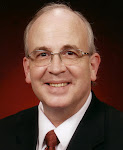
Greetings, and Welcome to The Small Shoppe

After the example of my Chestertonian mentor, Dr. R. Kenton Craven, I here offer my ponderings and musings for your edification and/or education.

You are welcome to read what is written here, and encouraged to do so. Appropriate comments may well be posted.

Michael Francis James Lee
The Not-so-Small Shoppe-Keeper

Saturday, October 11, 2025

 Miracles and Materialism


“There is only one intelligent reason why a man does not believe in miracles and that is that he does believe in materialism.” 
—“Miracles and Death,” St. Francis of Assisi, by G.K. Chesterton

© 2025 by Michael F. Lee
Originally published by Decided Excellence Catholic Media, October 2025

Have you, or anyone you know or have spoken with, ever said or wondered “why don’t we see miracles today?” Many seem to hold that miracles, if indeed they ever happened at all, simply do not happen anymore. 

This attitude may be due at least in part to the understandable debunking of myths and fairy tales undertaken by parents as their children age and develop. God forbid that a 9-year-old lets it slip that he or she believes in Santa Claus or the tooth fairy! 

If you couple this debunking with the oft-repeated adage, “God helps those who help themselves,” you have the vaccine needed to inoculate children against belief in the miraculous, whether intended or not. 

And what does the debunking offer in place of the forbidden beliefs? Sadly, what it often offers is a belief in materialism— after all, gold is reality! 

Mr. Chesterton, who happily retained his belief in dragons and in brave knights who slew them, would caution us against being too easily convinced of the materialist gospel. For he knew well that miracles happen every day, most notably on every Catholic altar, and that we only fail to see them because we’re focusing on accumulating perishable material things. 


Monday, October 6, 2025

 ST. MICHAEL THE ARCHANGEL

“Now war arose in heaven, Michael and his angels fighting against the dragon; and the dragon and his angels fought, but they were defeated and there was no longer any place for them in heaven” (Revelation 12:7-8, RSV2CE).


Other than the Blessed Mother and Saint Joseph, the saint who is perhaps the most sought out and invoked in times of trouble is Saint Michael the Archangel. He is specifically mentioned five times in the Bible; three times in the book of the prophet Daniel, once in the Epistle of St. Jude (describing an event presented in Zechariah 3:1), and once in the Book of Revelation (12:7-8). 


In Daniel, St. Michael is described as a great and mighty prince, a reinforcement and a bulwark, and as a guardian of God’s people. In Jude (and in Zechariah), he is seen disputing directly with Satan over the body of Moses, and in the Book of Revelation, it is St. Michael who leads the angelic host in battle against Lucifer and the other fallen angels. 

Unlike most saints, Michael (whose name means “who is like unto God?”) has no human story—no date of birth, no parents and siblings, no biographical information that gives insight into his upbringing and character. Angels are completely different from—and in most ways superior to—human beings, and St. Michael is seen as their “commanding officer.” 

St. Michael does, however, have some history among us. He is recorded as having appeared to more than a few people, including St. Joan of Arc, St. Aubert, Diego Lázaro de San Francisco, Pope Saint Gregory the Great, and Bishop Alfonso Puccinelli. He is also mentioned as being the most frequently appearing saint during the Rite of Exorcism, often making his entrance precisely at the moment of deliverance, as he did in the actual exorcism upon which the movie, The Exorcist, is loosely based. 

While not an apparition, per se, St. Michael was seen in a vision by Pope Leo XIII in 1884. In the vision, the Holy Father saw a spiritual battle between St. Michael and Satan. Also in this vision, Satan was heard boasting to God that he could destroy the Catholic Church, and God was heard giving Satan permission to try…for a time. Pope Leo was so deeply struck by this vision and the clarity of it that he composed the prayer that most of us now know as the Prayer to St. Michael the Archangel: 

“Saint Michael the Archangel, defend us in battle; be our safeguard against the wickedness and snares of the devil. May God rebuke him, we humbly pray: and do thou, O Prince of the heavenly host, by the power of God, cast into Hell Satan and all of the other evil spirits who prowl about the world seeking the ruin of souls.” Amen†  

This prayer was recited at the end of every celebration of the Holy Mass from 1886 to 1964. This practice was generally terminated after the 2nd Vatican Council, but then restored in practice by Pope St. John Paul II. While it is not required to be said after Mass, many parishes (and even some entire dioceses by decrees of their bishops) have again made it a regular practice. 

Given that St. Michael has neither a birthdate nor a date of death, you might wonder how he ended up with September 29th as his feast day (now shared with Saints Gabriel and Raphael). 

St. Michael’s feast day was chosen because September 29th commemorates the dedication of the Church of Saint Michael, on the Via Salaria outside of Rome, in the 6th century. The Feast of St. Michael is also known historically as Michaelmas and celebrated in thanksgiving for a bountiful harvest. 

St. Michael is revered as the patron saint of police officers, soldiers, first responders, grocers, bakers, and— appropriately—fencers (sword-fighters). He is also invoked as the defender and protector of the Catholic Church. 

St. Michael the Archangel, pray for us!

© 2025 by Michael F. Lee
Originally published by Decided Excellence Catholic Media, Sep. 2025


What is an Icon?

Referring of course to religious icons, rather than the same word as used in the world of information technology, icons are sacred images that are intended to assist us in veneration and worship. 

The word “icon” comes from the Greek eikōn, meaning simply, “image.” Interestingly, in the familiar story of St. Veronica wiping the face of Jesus (6th Station of the Cross) and discovering that the image of His face was left on her veil, we may note that her name, “Veronica,” literally means “true image.” 

In the Byzantine Catholic Church, as well as in the other Eastern Rites (and in the Orthodox Churches) icons play a prominent role. While we of the Latin Rite (“Roman Catholics”) are more accustomed to having statues in our churches, chapels, offices, and homes, our Eastern brethren give such places of honor to the holy icons. 

To the Byzantine Catholic, the holy icon is much more than simply a picture, a piece of art, or a “painting” (please don’t call them that). Holy icons aren’t even produced in the same way as our western sacred art (paintings and statues). 

The process of producing an icon involves prayer, meditation, fasting, and even, perhaps, penance, in order that the iconographer might faithfully respond to the Holy Spirit. The actual process that we, in the west, might refer to as “drawing” or “painting,” the iconographer refers to as “writing.” He or she writes an icon. 

It is somewhat common to hear iconographers say that they really don’t know if the icon they’re writing is finished yet. They relate to it more as if it is a living thing. They wait and pray, and seek God’s voice as to when their work has been completed. 

The typical way of venerating or reverencing an icon is to make a profound bow before it, make the Sign of the Cross, and—if permitted—kiss the icon on the hand or foot depicted. Some also kiss their fingertips and then gently touch that hand to the icon.

© 2025 by Michael F. Lee
Originally Published by Decided Excellence Catholic Media, Sep 2025.

Thursday, May 30, 2024

Saint Joan of Arc - Feast Day May 30th


Jeanne le Pucelle (Joan of Arc), one of five children of Jacque d’Arc and Isabelle Romée, was born on January 6
th, 1412 – the Feast of the Epiphany – in the village of Domremy in the northeast of France.

Along with her siblings, Joan was carefully trained in the various household duties.  Near the end of her life, Joan would declare, “In sewing and spinning, I fear no woman.”  Though she would one day be hailed as the savior and national heroine of France, she was at heart a simple, well-brought up, peasant girl who was never afforded the opportunity of learning to read or write.

Almost nothing for certain is known of her childhood, except for glimpses of her piety and behavior gleaned from the testimony given during her “Process of Rehabilitation” (Nullification trial), 25 years after her death. In these few testimonies we see a young girl who had a pronounced love of prayer, attendance at the Holy Mass, frequent reception of the Sacraments, solicitude toward the sick and the poor.  Neighbors of the family testified that “She was so good, that all the village loved her.”

During Joan’s early life, the “Hundred Years War” was going on between England and France, with entire French provinces being lost.  The weak and ineffective French government offered no real resistance. Eventually, most of France (north of the Loire River) was in the hands of the English. The “Dauphin” (crown prince) of France, Charles VII believed his situation was hopeless, so he spent himself in frivolous pastimes removed from the fighting lines.

At the age of 14, Joan began to hear voices that she believed were divine messages. The first of these came to her, accompanied by a bright light, while she worked in the family’s garden. From that day on, she kept a vow of virginity and strove heroically to live a Godly life.  Over the next two years, the visions grew more frequent, and included St. Michael the Archangel, St. Margaret, and St. Catherine of Alexandria. At length, these heavenly visitors revealed to Joan that her divine mission was to save France.  God was calling her to take Charles to be crowned king at Rheims – and to drive the English from the country. After being ridiculed in her first attempt to gain access to the Dauphin, Joan protested, but the voices insisted, “It is God Who commands it!”

In 1429, Joan was finally granted permission to see the Dauphin.  He was unsure of her, so he disguised himself and had her brought in.  Though she had never met him previously, Joan immediately identified him. 

Thanks to Joan’s faithfulness, Charles was crowned king on July 17th, 1429.  In a failed battle the following year, Joan was taken prisoner by the Burgundians.  Charles and his ministers never made any effort to free her and return her to France.  Later, the Burgundians turned Joan over to the English, who had her tried and condemned as a sorceress and heretic by a court of the Inquisition. On May 29th, 1431, Joan was officially condemned and at 8:00am the following day, she was burned at the stake, with her last word being the Holy Name of Jesus.  25 years later, a re-trial (process of rehabilitation) was convened by order of the pope at Avignon. Joan was vindicated, and her original trial condemned.

 Joan was beatified on April 18th, 1909, by Pope St. Pius X, and canonized on May 16th, 1920, by Pope Benedict XV, establishing May 30th as her feast day.  She is venerated as the patron saint of prisoners, people ridiculed for the Faith, soldiers, and people in need of courage.

St. Joan of Arc, Pray for us that we may bravely live our Catholic Faith!

"Joan of Arc is a wild and wonderful thing enough, but she is much saner than most of her critics and biographers. We shall not recover the commonsense of Joan until we have recovered her mysticism."

–G.K. Chesterton, Illustrated London News

[Image: Jean-Auguste-Dominique IngresJoan of Arc at the Coronation of Charles VII]

Monday, February 12, 2024

It's Time for Your Medicine


I know that Lent isn't "just about giving up things," but...

It very much is...ALSO...about giving up things. Mortification and penance are important medicines for our souls. We're sinners, and the giving up of things -- such as we do with fasting and abstinence -- is part of the "prescription" assigned by the Church and enshrined in Scripture.
Let's not be too easy on ourselves this Lent. It's not "self-abuse" to examine our lives and decide to forego one, two, or several "good things" out of love for God and in order to "medicate" our souls.
Lent begins this Wednesday.
Take some dedicated time today and decide what you will set aside until the celebration of the Resurrection of the Lord.
The Church requires fasting (an actual reduction in the amount of food we consume) on only two days; Ash Wednesday and Good Friday. Abstinence from the eating of meat (warm-blooded flesh) is required on Ash Wednesday, Good Friday, and on all Fridays of Lent.
That is the MINIMUM.
Your own freely chosen sacrifices are your love-offering to God.
We all need the good fruits of Holy Penance.

Monday, January 15, 2024

 “THE HOLY FAMILY IS IN DANGER OF INSULT; NOT EVEN BECAUSE IT IS HOLY, BUT MERELY BECAUSE IT IS A FAMILY.” 

~ G. K. Chesterton – New Witness, December 10th, 1920 


Read that again please and take note of the date on which it was published. The longer I am a student of Mr. Chesterton’s writings, the more often I find myself marveling that he seems to be—in a sense—timeless. 

What he wrote in 1920 could just as easily have been written by someone this week, as we all know that the family is under attack. Perhaps more subtly at times the attack on the family takes the form of disregard. As corporate, educational, and governmental entities cancel the words husband, wife, mother, father, son, and daughter, one can easily imagine that the very word family will also be jettisoned. 

Of course, the attack on the family is an attack on God, who is revealed to us as a family—The Most Holy Trinity. Jesus Christ is conceived in the womb of Blessed Mary and is born into a family. Jesus sends the Apostles forth to baptize us into His family, the Church. 

So yes, as Mr. Chesterton said, the Holy Family endures insult “merely because it is a family.”

Sunday, June 3, 2018

Single, Married, Available, or...

"Satan, it would seem, does not act in an arbitrary manner when trying to tempt us. Rather, he is more of a master hunter carefully setting traps, or a skilled fisherman who carefully studies behavior in order to choose the most effective bait. Satan is calculating and clever."
   ~ Msgr. Charles Pope, in First the Bait, Then the Hook – a Sober Meditation on Temptation

I was in a conversation with a young, Catholic friend just the other day.  This young man is, by all accounts, a solid Catholic, committed to purity and chastity in accord with his current single state in life.

At one point in our conversation, Tom (not his real name) was referring to an exchange between himself and another young Christian, and said "I told her I wasn't single..." (though, to be sure, he is indeed single). Perhaps he meant that he wasn't presently looking for a girlfriend-boyfriend relationship.

The more I have mentally replayed and considered this part of our conversation, the more concerned I am about what I see as a subtle and dangerous trap being set against Catholic young people (and against all Christians) regarding sexuality, marriage, chastity, purity, and the single state.

As I thought about this, I recalled hearing similar statements from good, Christian, young people; referring to themselves as "not single," even though it was clear they were not married.  I've also heard young people say "I'm single again," even though they have actually been single their entire lives to that point.  And, of equal concern, I have seen such young people list themselves on Social Media as "Married," though they are single. Finally, some have described themselves, saying "I'm available," in response to which one might ask, "Available for what, exactly?"

Here are my main points of concern regarding this particular incursion  of secular humanism into Catholic Christian culture:

1. It is an attack on marriage.  This re-defining of "single" and "married" serves to desensitize us as to what these terms have always meant -- especially as to how they have traditionally been used and applied in the Teaching of the Church.  It follows then, that it is also an attack on the single state, on celibacy, and ultimately on chastity and purity.  It subtly, or not so subtly, encourages a belief that being single is a negative situation in need of remedy -- or at least something to hide from view ("I'm not really single right now").  As pertains to Chastity and Purity, if one is "not single," then is it really wrong to indulge in those things rightly reserved for married persons? Satan loves to blur the lines.


2. It is, further, an attack on the Indissolubility of Marriage, taught by the Catholic Church as revealed Truth.  Again, by means of desensitizing young people, the idea of moving in and out of being "single right now," breaks down the young Christian's resistance to divorce and multiple "marriages."  By the time these young people are really and truly married, they will have already had the experience of being "single", "not single right now", "married", and "available again", many times -- so what's the big deal if this marriage doesn't work out? Satan loves rationalization.

3. It devalues the individual person, and promotes the hook-up culture.  This perversion of truth teaches young people that being single means being available.  Again I ask, available for what?  It leads young people to see themselves as being of little or no value until and unless someone saves them from their "availability." Satan loves to leave you hanging.

4. It confuses the differences and distinctions among casual friendship, dating, and courtship.  Everything becomes a "pretend marriage." See: https://www.catholicnewsagency.com/column/the-difference-between-courtship-and-dating-1276
Satan loves confusion.

I encourage everyone, especially young Catholics (and other Christians) to study Pope St. John Paul ll's "Theology of the Body."  Learn about the great gifts God has given to each of us, and the high value He places on each of us.  Learn to be thankful and joyful "in your own skin," so that you do not fall into the trap of believing that your importance and worth depend on being "not single."  

Finally, I encourage everyone to remember that "words have meaning," and there is a very real danger to our culture and even to our souls when we blur those meanings.

Saturday, March 26, 2016

Don't Touch Them! They Are Not Yours!


The hit-pieces against Pope Francis, for daring to wash the feet of non-Christians, have been circulating widely since Thursday. In a very juvenile post on the *Toronto Catholic Witness,* the claim is made that the Holy Father violated his own reform of liturgical law, by washing the feet of people who are *not people of God.*

While "People of God" may be seen in an exclusive sense; referring only to those within the communion of the Church, it can also be seen in a more general sense in which it is meant that God is truly the Father of all; and thus all people --whether they know and acknowledge it or not -- belong to Him.

Thus, my response to these attacks is best summed up by these words from the Gospel:

And I have other sheep, that are not of this fold; I must bring them also, and they will heed my voice. So there shall be one flock, one shepherd.” 
(Jn 10:16, RSVCE)

My view is that Pope Francis believes that a very good way of bringing these other sheep into the fold, is to touch them -- literally and physically -- with the mercy and love of Jesus Christ.

Sunday, December 27, 2015

I’ve just been so busy...

When I was just a boy, there were so many wonderful adults in my life; grandparents, uncles and aunts, older cousins, and neighbors who seemed more like family. Though I didn't realize it, due to my young age and mindset, these people were in my life because they loved me, and made a conscious decision to be available to me; I was important to them.

As I grew older, into my 20s and 30s, I gave in to the tendency, or temptation, to leave these relationships unattended. I was busy now. I had things to do, and just didn’t have time to keep up all of those contacts. I had time for school, for work, for the things that seemed most important, but not for the people I was letting slip out of my consciousness.

I would, from time to time -- possibly from pain of guilt -- stop in an see one of these “old folks.” I clearly remember my all too infrequent visits to my grandmother. She lived only a mile or so from me, yet I know I didn’t visit her more than several times a year. I would always say something like “I should stop in more often, but I’ve just been so busy lately...” Grandma would smile a little, give me a kiss, and say “Oh, you have plenty to do, you don’t have much time for old people like me.”

I’d feel badly for a minute, and then rationalize that Grandma was just being dramatic, and feeling sorry for herself. I didn’t let it dawn on me that she may have been trying to teach me something very important.

Now that I am one of the “old folks,” I am learning what I think my grandma was trying to teach me. The lesson is more painful now, but I am learning it nonetheless.

During the course of my life I have had the great blessing of being close to many people. I have been a friend, a teacher, a youth leader, a mentor, a coach, a Godfather, an uncle, and a brother.

For many of those years, the people whose lives intersected with mine remained in close contact. We talked -- either in person, or by phone -- often. Christmas and New Year’s were sure to be times when we connected. With some, it even happened on birthdays.

Lately, more and more of these younger friends are drifting out of contact. Now and then I will hear from one of them, usually by text-message, and they begin by saying something like “I was going to call you, but I’ve just been so busy lately...”

At the age of 63, I’ve learned many lessons in my life. One of them is that, as busy as I might be, I have time for the people for whom I make time. I am now learning how much it hurts when people whom you love drift away.

I have not written this for sympathy. In fact, I nearly did not write it at all. I decided to write this in hopes that I might help someone else (or maybe even a few someone elses) to learn what I believe my grandma was trying to teach me.

Make time for those who have loved you and have been there for you in the past. Those people were put into your life as blessings, and you now have the opportunity to be a blessing to them in return.

If you’re too busy for that, you really are too busy. Only you can change that.


An old saying goes “Make new friends, yet keep the old; One is Silver, and the Other is Gold.”

Saturday, May 30, 2015

May His Blood be Upon Us, and Upon the Whole World

"Eternal Father, I offer You the Body and the Blood, the Soul and Divinity, of Your dearly beloved Son, Our Lord Jesus Christ, in atonement for our sins, and those of the whole world."


I am as certain as I can possibly be that I was graced with a vision of sorts this morning, prior to the beginning of the 8:00am Mass at St. Patrick Oratory in Green Bay, Wisconsin (which is served by the Institute of Christ the King, Sovereign Priest). 

I am not joking; so don't expect a punch line. I am, as they say, "as serious as a heart attack." Parts of this I will need to omit, as those parts would impinge upon the rights of others to privacy and confidentiality.

The substance of it is this: As I entered the Church proper, I looked up at the very large, wooden crucifix, suspended behind and above the high altar. 

This photo, taken at St. Patrick's Oratory, is from 2014
Those of you who know me well, also know that I am critical (some would say hypercritical) of things artistic -- as well as being a symmetry freak. So, as I looked up, I nearly gasped -- the "blood" that's painted as coming from the feet of Our Lord, had been -- it seemed clearly to me -- painted over, a bright, sort of "wet-look" red -- like a glossy red nail polish. Right away, I went into my critical mode, thinking such things as "Who in the heck did THAT? Why did they have to do that? Why didn't they just leave it alone; it doesn't match the blood on the hands."

Then, suddenly, I was overcome with an inspiration to pray the chaplet of the Divine Mercy for a particular intention -- that shall remain private. I immediately did so, now sensing that what I was seeing was not simply someone's touch-up painting work. I finished the final "Amen" of the chaplet, just as the corporate Rosary -- which is prayed before each Mass at the Oratory, was beginning. Thus, I was able to pray the Rosary as well, for this same intention.

During the rosary, sensing that my prayer had been answered, I looked back up at the Crucifix, and nearly gasped again; the color of the painted blood on the feet of Our Lord looked, once again, like that of dried blood.

I am not at all given to "seeing things," and those who know me personally, know that I am among the strongest skeptics when these sorts of things are spoken of. That said, I know what I saw today; and -- thankfully -- I believe that I know why I saw it.

"For the sake of His Sorrowful Passion, Have Mercy on us, and on the whole world." Amen.

Wednesday, April 8, 2015

I have been suffering, on and off, for many years with low and mid back pain.  Over the years I have seen both chiropractors and medical doctors.

Recently, approximately a month or so ago, I had a flare-up of extreme back pain, that -- contrary to my usual pattern -- did not subside after 3 or 4 days.  I decided it was time to see my primary care physician, and let her know of the problem.

She is an excellent physician; the very best doctor by whom I have been treated in my entire life.  Her genuine concern was quite obvious. She ordered an immediate x-ray, and she was able to get me in quickly for an appointment at a local spine center.

The doctor who saw me at the spine center seems to be a fine physician as well. He ordered an MRI, which was completed once the "peer reviewers" approved of the procedure.

The MRI showed in greater, "pinpoint" detail what had been indicated by the x-ray.  I have two compressed and deteriorating discs, which are impacting the sciatic nerve.  On the MRI, a red, protruding object, looking something like a jellybean is clearly visible -- and seems to be the thing that is contacting the sciatic nerve.

The considered opinion of the doctor at the spine center, given my extreme level of pain, and the fact that I have gone, in a matter of weeks, from walking unassisted, to using a cane, to using a walker, and now to using a wheelchair, is that spinal injections are the next effective step.  He set me up for the procedure to take place on April 15th.  He wanted to to do it right away, but because my insurance is through the "marketplace" (read "Obamacare"), he had to schedule it out at least two weeks, so that those charged with "preauthorizing" such procedures would have sufficient time for their task.

I will not be getting the spinal injections that I need on April 15th after all. Those who are paid to find reasons to deny coverage have done their jobs well, and I was told, in the late afternoon on April 7th, that I was denied. My doctor will now have to come up with some sort of treatment (which the deniers will have to approve) that will be considered "conservative care." I will need to undergo that treatment for at least 6 weeks -- and the two weeks of pain, canes, walkers, wheelchairs, and assorted medications I have already been through, of course, do not count toward the required six weeks of "conservative care."

I spent the remaining hours of yesterday afternoon and evening moving in, out, and among various negative, unpleasant, and mentally numb states of mind.

Evening came, and then Morning came; the second day.

As I had my morning coffee, graciously pre-prepared by a friend who visited me late last evening, I collected my thoughts, and made a conscious effort to pray.

These are the words that came:

Dear Blesseds Francisco and Jacinta of Fatima,
You knew and endured suffering, accepting it joyfully for the conversion of poor sinners.
Help me now to accept and embrace whatever suffering is to come my way, for whatever time lies ahead.  Help me to do so without complaining, and to be joyful.
Help me to offer my suffering in reparation for my own sins, for the sins committed by others due to my influence or bad example, and for the conversion and salvation of other poor sinners.
Help me also to offer my sufferings lovingly for the consolation of the Immaculate Heart of Mary, and the Sacred Heart of Jesus.
Amen.

I may well fail miserably in this resolve, yet I hope by God's grace, and the helpful prayers of Francisco and Jacinta, to start over again, after each failure, and continue to offer my pain and trials as prayerful sacrifices.

----------------------------------

For those who would like to do something similar, with whatever sufferings come their way in life, I offer the following Fatima Prayers:

MORNING OFFERING
O my God, in union with the Immaculate Heart of Mary (here kiss your Brown scapular as a sign of your consecration – this carries a partial indulgence). I offer Thee the Precious Blood of Jesus from all the altars throughout the world, joining with it the offering of my every thought, word and action of this day.
O my Jesus, I desire today to gain every indulgence and merit I can, and I offer them together with myself, to Mary Immaculate, that She may best apply them to the interests of Thy Most Sacred Heart. Precious Blood of Jesus, save us! Sorrowful and Immaculate Heart of Mary, pray for us! Sacred Heart of Jesus, have mercy on us!
PARDON PRAYER
My God, I believe, I adore, I hope and I love Thee! I beg pardon for those who do not believe, do not adore, do not hope and do not love Thee.
ANGEL’S PRAYER
O Most Holy Trinity, Father, Son and Holy Spirit, I adore Thee profoundly. I offer Thee the most precious Body, Blood, Soul and Divinity of Jesus Christ, present in all the tabernacles of the world, in reparation for the outrages, sacrileges and indifference by which He is offended. By the infinite merits of the Sacred Heart of Jesus and the Immaculate Heart of Mary, I beg the conversion of poor sinners.
EUCHARISTIC PRAYERMost Holy Trinity, I adore Thee! My God, my God, I love Thee in the Most Blessed Sacrament!
SACRIFICE PRAYER
O My Jesus, it is for love of Thee, in reparation for the offenses committed against the Immaculate Heart of Mary, and for the conversion of poor sinners.
DECADE PRAYER
O My Jesus, forgive us our sins, save us from the fires of hell. Lead all souls to Heaven, especially those most in need of Thy mercy.
To Learn More about Our Lady of Fatima, and to do so in Communion with the Magisterium of the Catholic Church, visit: http://wafusa.org/

Saturday, April 4, 2015

The Last Sabbath is Laid to Rest

They took the body of Jesus, and bound it in linen cloths with the spices, as is the burial custom of the Jews. Now in the place where he was crucified there was a garden, and in the garden a new tomb where no one had ever been laid. So because of the Jewish day of Preparation, as the tomb was close at hand, they laid Jesus there. John 19:40-42 (RSVCE)

In one of the interesting and varied occupations of my life, I served for a time as a custodian at a conservative synagogue in a suburb of Milwaukee, Wisconsin. That position included duties as a shabbos goy from sundown on Fridays, to sundown on Saturdays.

There are certain types of work, known as melakha, which cannot, except in life or death emergencies, be done by observant Jews on the Sabbath. As a non-Jew, I was permitted to perform these tasks in service of the synagogue, and in personal service to the rabbi and his family.

Before the beginning of the Friday evening service, I would light the candles in the synagogue sanctuary, and turn on all of the necessary lights throughout the building, as well as attending to the interior climate controls, sound system, and anything else that depended upon the flow of electricity, or the spark of flame.

Because "God rested from His work of creation" on the 7th day, observant Jews rest especially from any work that involves creative energy - or creates a spark.

Following the services, I would put away whatever had been used, and set all of the lighting, climate controls, sound system, and other electrical controls to their proper settings for the closing of the facility.

Then, I would walk the short distance to the Rabbi's home, and knock (rather than ring the bell) at his front door.  After exchanging the greeting "Shabbat Shalom" (Sabbath Peace), I would accompany the Rabbi through his home, turning on or off such lights and appliances as required attention for the overnight hours.  On my way out, I would set the alarm, using the panel near his front door, making sure that it was set to disarm at the appointed time the next morning.

I would arrive again at the synagogue on Saturday morning, and again set up everything needed for their services, and attend to any candles, lights, sound systems, etc, as I've mentioned previously.

In the late afternoon on Saturday, I would again set up everything for the service which would close the observance of the Sabbath.  Once sundown arrived, my service as a shabbos goy came to an end, I returned to my regular duties as a custodian.

The details of my days as a shabbos goy returned to me today, Holy Saturday, as I was contemplating the Lord resting in the sleep of death in his borrowed tomb.

Though the world knew it not, the old Sabbath itself was having its last observance. The old Sabbath, with its absence of the creative spark of life, was lying in the tomb with Jesus, as He observed it for the last time.

Jesus would soon, with his glorious resurrection, forever change the Sabbath.  The new Sabbath would be marked by a mighty release of creative energy, the likes of which had not been seen or known since God first said "Let there be Light!"

The new Sabbath would begin with the kindling of a light so bright and powerful, that the stone use to seal the tomb would be rolled away, and the guards watching the tomb would cover their eyes, and fall to the ground as if dead.

The new Sabbath would be forever marked by the lighting of candles, the blaring of trumpets, the playing of organs, and the illumination of Church buildings. The work of the lighting of lights would now become an integral part of the celebration of the new Sabbath - from beginning to end, without limitation or prohibition.

While unnecessary work remains prohibited in the observance of the new Sabbath -- a point we do well to remember -- the signs and symbols of new life are the very hallmark of our Sunday celebration.

So, tonight, when we witness the lighting of the New Fire, let us remember that we are a New People -- called to New Life -- and called to be, and to kindle, the Light of Christ, the Light of the New Sabbath, wherever we are, and wherever we go.


Friday, April 3, 2015

When Reason is Dethroned

Dr. Ken Craven is, if anyone can justly claim the title, the person most singly responsible for the ruination of my schismatic foray into Anglicanism, and my subsequent return to the Catholic Church.  It all began innocently enough, when the good professor spotted me on a downtown corner in Sparta, Tennessee, and invited me to partake of a Chesterton reading group he was convening at a local coffee shop.  We read Chesterton's "Orthodoxy," and so began the slow reopening of my eyes.

The following is a letter submitted by Dr. Craven to the "Sparta Expositor," a publication that passes for what used to be known as a local newspaper.  Now, being simply an in-print instrument of the madness that rules in most communities, it is doubtful that Dr. Craven's letter will grace their pages.

If Dr. Craven's words were of strictly "local Sparta, Tennessee" importance, I would not be passing them along to a wider audience.  It is unfortunate that his words are equally applicable in Green Bay, Wisconsin, and -- I will venture to say -- in your community as well.  

As I tip my hat to my dear home schooling friends, I strongly recommend Dr. Craven's letter for your reading and attention.


When Reason is Dethroned

“”When reason is dethroned, not only is Faith dethroned (the two subversions go together) but every moral and legitimate activity of the human soul is dethroned at the same time. There is no God.” –Hilaire Belloc, Heresies, 1938

Thus wrote a great historian in the year of my birth. I recall these words when I encounter the nonsense recently reported on Fox News from McMinnville where a mother was required to shave her son’s head to meet a mysterious code of the school. The crime? The boy came to school with a military haircut—in an elementary school named for a Vietnam war hero. 

But this opinion column is not about a young boy having his hair cut off; it is about lots of boys and girls having their heads cut off.

If the incident were merely proof of a local stupidity, it would merit little notice, but it is in fact just another tiny bubble from the gaseous monster of public education, which is so permeated with the sickness of moral relativism that its makers can no longer perceive themselves as rational beings when they get up in the morning. If you are a public school teacher or administrator and this offends you, all well and good. That permeation by moral relativism, which distorts everything real, is not merely indoctrination, it is a viral contamination.

It can be so deep seated that in an informal class I taught in a local coffee shop a man who had been a Baptist Sunday School teacher for most of his life said, “I have been a moral relativist for most of my life without knowing it!”

If the meaning of the phrase is escaping you, perhaps you too are a carrier of the relativist virus. Moral relativism is, quite simply, the view that every moral code or ethics is equally valid and every person has a right to his own. When teaching Honors classes at TTU, I challenged students to explain to me why the moral code of any serial killer was not equal in value to their own. They had all been graduated from public schools and reacted as if they were stung by a torpedo fish. I got few answers.

For nearly a hundred years now, the public school system has been created and administered by ideologues firmly rooted in moral relativism and all its effects on every subject. Every year, education colleges at universities graduate teachers who can no longer distinguish right from wrong or good from evil. When I tried to discuss this with an education professor at TTU, I learned that she had no idea of what moral relativism is or whether it resided in her head. 

When I wrote about this in the Expositor about nine years ago, recommending home schooling and the abolition of public education, I received support only from an elderly Baptist minister, a kindly gentleman now deceased. I could not even provoke a controversy—the mandarins and lackeys of the public schools, secure in their ignorance and salaries, will not even rise to the bait. Even Ronald Reagan, faced with the bureaucratic terrors, backed down from his promise to abolish the U. S. Department of Education.

I have a copy of a handwritten contract between my great-great grandfather Nathaniel Marks and five families in Woodlawn, Ky. In which he promises to educate their children in basic subjects in return for some dollars, a school building, and firewood. No federal agents were required for this transaction, and the control of the school and approval of the teacher were entirely in the hands of the families, who could be alert to any misdoings or immoral teachings. Much later, but before the federal deluge, my father completed only the ninth grade in Springfield, Ky., where McGuffey’s Readers helped him become a better speller, writer, and reader than most college graduates today.

As my Church teaches, the family is, under God, the natural authority over children, and to surrender any of that control to the State is a serious moral matter. Every morning, millions of parents surrender that authority to the Federal government with hardly a blink of an eye—and then are astonished by the results in the national culture. As an experienced college professor, I am a scarred veteran of thirty-plus years of trying to re-educate the shell-shocked, arrogant, or drugged aliens from the public schools, many of who no longer know green grass, blue skies, or human speech.

By sharp contrast, most of my fifteen grandchildren have been wholly or mostly home-schooled by parents who have made great sacrifices to achieve this. Despite propaganda to the contrary, their children are all very well developed, literate, self-confident persons, some of whom have had stellar college careers. I expect the same from my growing tribe of great grand-children, and if I have any hope for America, it is vested in these good Christian young men and women who have not given up the minds to the State or the confusions of a deracinated, non-Christian culture.

That culture should be obvious to those who have not lost their wits—a culture dominated by the unnatural—abortion, pre-natal engineering, homosexual ‘marriage’, and a growing phalanx of violations of God’s natural and moral laws. That is what Hilaire Belloc meant when he wrote “every moral and legitimate activity of the human soul is dethroned at the same time. There is no God.” In 1938, he could see it all coming.

The current controversy over the Core Curriculum quite misses the point. Many seem to think opting out of this latest Federal control will solve the educational problem. It will not. As Professor Anthony Esolen, a Christian professor at Providence College says, it will only emphasize that the current heart of education is turning students into endless acquirers of skills, without any moral, spiritual, or imaginative souls. Think artificial intelligences with endless gimmicks but no depth.

The solutions? First, recognizing that when defeat came at Appomattox, not only swords and cannons were surrendered to the Federal invaders, but basic principles, mind, the sacredness of the home, the authority of parents, and a Christian culture. The solutions can only be a family revolution backed by courage and resistance.

Dr. Ken Craven

Thursday, April 2, 2015

The "Mystifying Oracle" is an Abomination to the Lord

"There shall not be found among you any one who burns his son or his daughter as an offering, any one who practices divination, a soothsayer, or an augur, or a sorcerer, or a charmer, or a medium, or a wizard, or a necromancer. For whoever does these things is an abomination to the Lord; and because of these abominable practices the Lord your God is driving them out before you."
Deuteronomy 18:10-12, RSVCE

I am fairly certain that I have never posted, here in The Small Shoppe, an article such as this previously.  I do so now in response to several requests from friends who have become privy to the fact that I have, in my past, a rather incredible experience involving my innocent and ignorant receipt and use of a most curious Christmas gift.

As I am now in my early sixties, it is possible -- nay, likely -- that I may be off by a year or so, when I estimate that these events took place when I had approximately 7 years of earthly life to my credit.

Someone, I am supposing an aunt or an uncle, and I am supposing innocently enough, gave me a rather large, gift wrapped box, containing my Christmas gift.  From the size and dimensions of the package, I surmised that it was some sort of board game.  As I tore the wrapping away, and tossed the ribbon and bow to the floor, I remember being somewhat awe struck at the enticing imagery on the box I now held in my hands.


I'm not sure that I could yet have read the words "Mystifying Oracle," and I know I could not have correctly pronounced "Ouija," yet I knew that there was something magical, and perhaps a bit "spooky" about this present that I now clutched tightly; sensing it had some great value.

I don't think my parents knew anything of ouija boards, nor of oracles.  It is likely that they took my aunt or uncle's word that it was nothing more than a fun game, that would provide hours of entertainment and fun for the family.

I do remember that we took it out of the box, set it on a card table, and tried to make it "work."  As I recall, it did nothing at the time.  Later, my older sister and older brother got it to spell out some things, but we all assumed they were pushing the little gizmo around, to make it say what they wanted.  This may well have been the case.

Uncharacteristic as it may be for males, I've always been the type to actually read directions and manuals.  When I determined that the ouija board was not working as described, I took out the directions, and my older brother and I gave it another go.  We touched our fingers so lightly to the movable piece (the thing I earlier referred to as a gizmo), that we could only barely feel that we were touching it at all.  Then, one of us -- I can't say for certain if it was I, or my brother, asked a question.  

After several minutes of nothing, the gizmo began to slowly glide around, stopping over certain letters, but neither my brother nor I could make heads or tails out of it; it seemed like gibberish to us. Then we tried asking some "yes" or "no" type questions, and the results came easier, and with less waiting.

Soon one of my sisters took over, and she had the ouija board answering questions to the obvious delight and amazement of our aunts, uncles, and cousins who were present.

I only remember playing with it a few times after that, and then it, like many board games received for Christmas, found itself unceremoniously stacked in a pile in our hall closet.

Strangely, it kept showing up on the floor in the living room, or in one of our bedrooms -- the children's bedrooms though, not my parents' room.  We would put it back in the closet, when told to by our mother, and in a day or so, it would be sitting out again.

Sometime thereafter, my mother had spoken with a chaplain at the Catholic Hospital at which she was employed, one Fr. Angelus Stunek, O.F.M., and he had filled her in on the dangers of ouija boards.  When my mother got home, she spoke with my father about it, and he took and dispatched the mystifying oracle to the garbage cans which had just been placed outside our backyard fence, for pick up the next morning.

The next day, after the garbage crew came and left, my dad found the ouija board on a bench at our kitchen table.  He demanded to know who had retrieved it from the garbage, and he received the response often heard by parents, the world over, "not me."  So, out it went to the garbage can again.

Later that evening, the ouija board turned up tucked under the couch where my mom usually sat after supper, while she would read the newspaper.

At this, my dad took the board outside, and chopped it into pieces with the axe with which he usually chopped wood for our furnace.  Then, he bagged the pieces, and, again, put them in the garbage.

That same evening, my father found the ouija board in our toy box, located in one corner of the living room.  The board showed signs of having been cut, or chopped into pieces, but it did not appear as though it had been glued or taped back together.  I appeared as though it had grown back together; as though the cuts and chops had been healed.

I remember my dad saying "This is it!"  He took the board outside, chopped it up again, burned it, and stayed outside until it was entirely reduced to ashes, and then poured holy water over the ashes until they were reduced to a black puddle.  Then, using a shovel, he dug up the ashy mud, and buried in our flower garden, under an outdoor shrine of Our Lady.  Some days later, Fr. Angelus came by, and blessed the garden.  He may have done other prayers and rites as well, but at my age at the time, I cannot now say for certain.  I can say for certain, that the mystifying oracle never again worked its way back into our home.

For more information on the Catholic view of Ouija Boards, see: http://www.catholic.com/quickquestions/are-ouija-boards-harmless